| THAT KILTED GUY DIY |
|
PRACTICAL DIY ADVICE
7 Drywall Repair Mistakes That Show Through Paint
Avoid the little patching mistakes that become painfully obvious after the wall is painted.
|
|

A drywall patch can look fine while you’re working on it—and then stand out like a spotlight after the paint dries. Usually, the problem started before the paint ever went on. The image above is an extreme example, but it happens a lot, even when some 'Pros' do the work.
|
1. Using too much mud
More compound usually means more sanding. Several thin, wide coats are easier to hide than one heavy coat.
|
2. Rushing between coats
Compound that is still damp can shrink, crack, or pull loose when you sand or recoat it.
|
3. Not feathering the patch wide enough
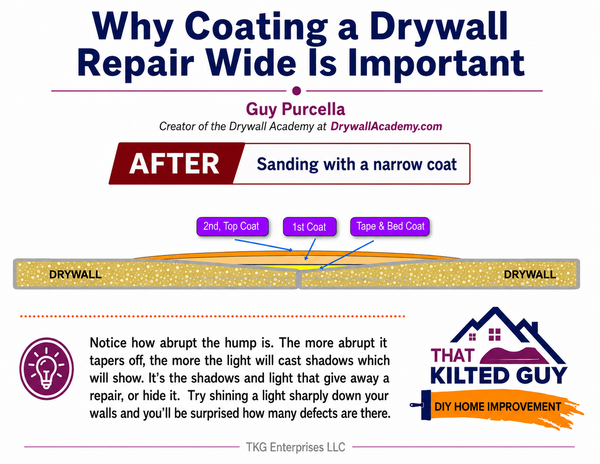
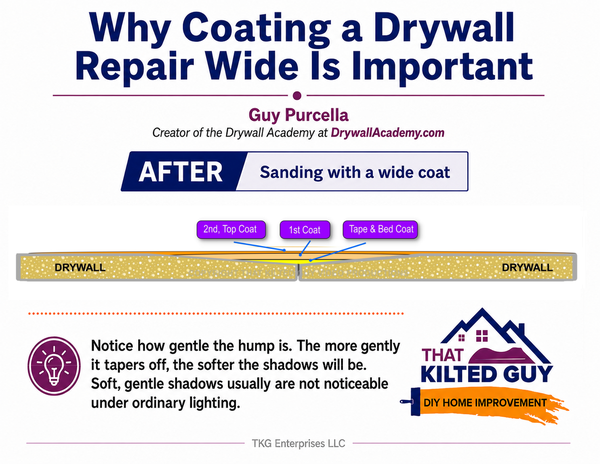
Each coat of joint compound should extend farther than the last. Make sure you feather the outer edge as thin as possible without sanding through the drywall paper. If the patch ends too abruptly, it can leave a visible ridge or shadow after painting.
|
|
See the difference: a narrow coat leaves a sharp hump; a wide coat feathers the repair into the wall.
|
4. Sanding through the drywall paper
Once the face paper is fuzzy or torn, paint can exaggerate it. Seal damaged paper before adding more mud.
|
5. Not matching the texture properly
Even if you do a good job repairing the drywall, the repair will stand out like a sore thumb if the surrounding area has texture and you do not match it well. Practice matching the texture on scrap drywall, cardboard, or another test surface until you feel confident in the match. Then carefully blend the repair texture into the existing texture without creating a thick line around the outer edge that can give away the repair with a halo effect.
|
6. Skipping primer
Joint compound absorbs paint differently than the surrounding wall. A proper drywall primer helps prevent flashing and uneven sheen.
|
7. Judging the wall only from straight on
Shine a work light across the wall from the side. Low-angle light exposes ridges and hollows before paint does.
|
| Explore My Drywall Guides |
Want to go deeper?
This is a short, practical guide to help you avoid common drywall repair mistakes. For more detailed, step-by-step training, explore the courses at my Drywall Academy by clicking the button below.
Explore Drywall Academy Courses
|
|
The best time to find a bad patch is before the paint goes on. Slow down, widen those edges, and check the repair from several angles.
Guy Purcella
That Kilted Guy DIY
|

